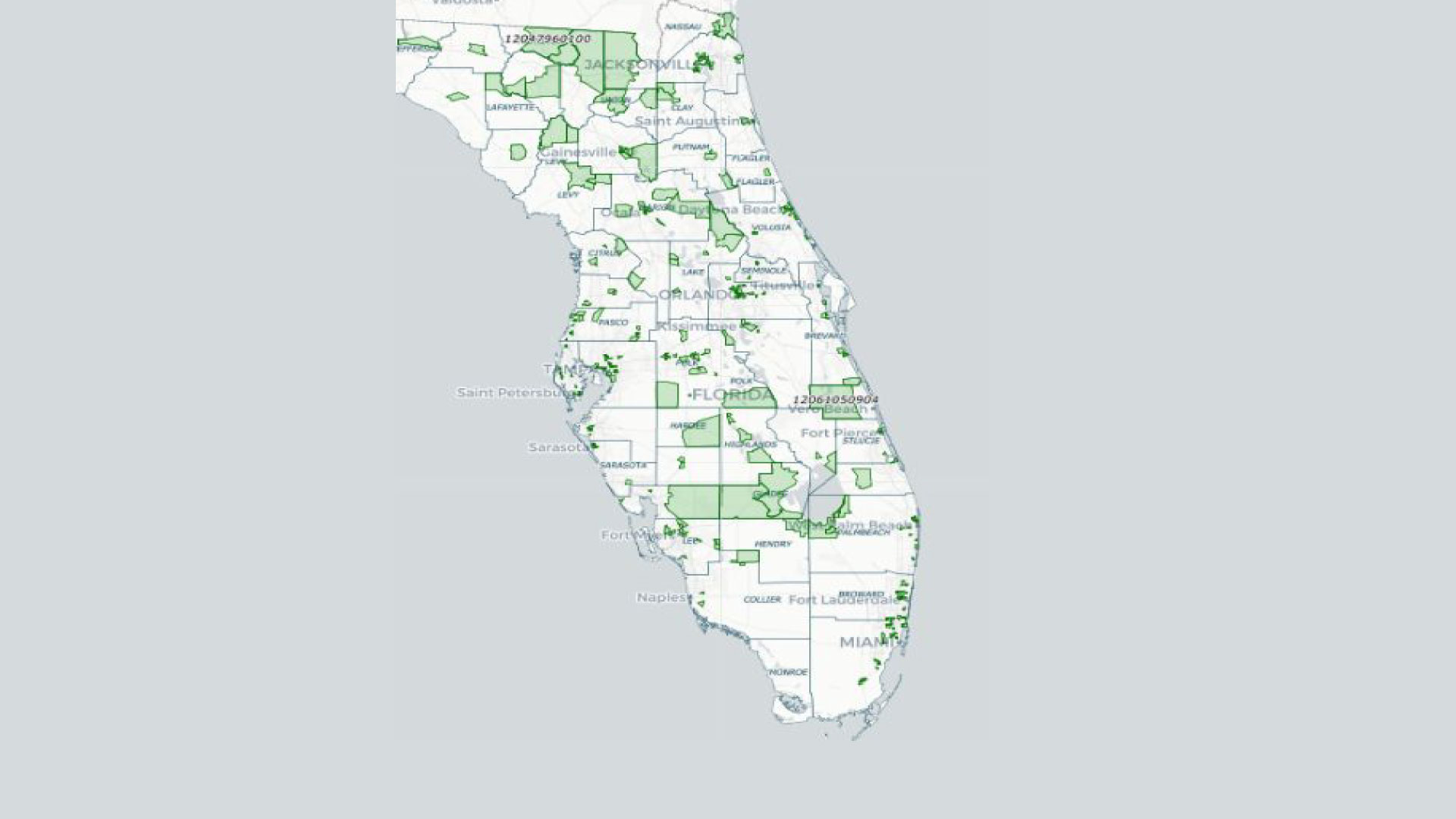
The federal Opportunity Zone (OZ) program—initially launched in 2017 under the Tax Cuts and Jobs Act—is getting a major upgrade. As the current program sunsets at the end of 2026, a new, more focused version is set to take its place, bringing changes that could reshape how and where investors deploy capital.
Rural Areas Are Center of Changes
The most notable shift in the new program is its focus on rural communities. Of the 8,764 zones currently designated across the U.S., over one-third—roughly 3,300—are now classified as “rural” and eligible for enhanced benefits. These areas will see a significant change to one of the most important investment thresholds:
- The “substantial improvement” requirement has been reduced from 100% to 50% of the investor’s property basis.
- Investors will still have 30 months to complete those improvements.
This reduced threshold could open new possibilities for rural development—especially for sectors like data centers, logistics, light industrial, and infrastructure-related real estate, where available land is abundant but capital has been limited.
New Incentives and Step-Ups
The restructured legislation introduces a rolling five-year deferral period and continues the existing 10% step-up for five-year holdings. What’s new is an additional 30% step-up for investments made in Qualified Rural Opportunity Funds, adding another layer of incentive for investors willing to look beyond metropolitan markets.
For developers and fund managers, this could mean more flexibility in structuring rural projects and attracting patient capital—particularly in underdeveloped areas with lower entry costs and long-term upside potential.
Fewer Zones, More Competition
While the new program broadens benefits for rural areas, it also tightens eligibility requirements across the board. The definition of a low-income community is narrowing, now limited to Census tracts with:
- A poverty rate of at least 20%, or
- A median household income no more than 70% of the area median (down from 80% under current rules).
This means fewer communities will qualify, and states will face tougher choices when designating their new zones. Governors are expected to nominate new tracts by July 1, 2026, with the refreshed program officially launching January 1, 2027.
Analysts estimate that the total number of OZ tracts could drop from 8,764 to around 6,500—a 26% reduction—making competition for designation fierce among municipalities and property owners.
A Push for Transparency
Another significant update involves transparency and reporting. The revamped OZ legislation introduces stronger data and disclosure requirements, giving policymakers and the public better insight into which projects are receiving investments and how those dollars are performing.
This transparency push could help rebuild public confidence in a program that has occasionally faced scrutiny over its effectiveness in helping low-income areas. “It’s going to make the whole process more transparent and by doing so it will build public support,” Ryan noted. “This has overall been a net benefit to low-income areas.”
Why It Matters for Florida Investors
For Florida investors and developers, especially those active in secondary markets or fast-growing suburban corridors, this next phase of the OZ program could be transformative. Rural and semi-rural counties—often within driving distance of metro areas like Tampa, Orlando, and Jacksonville—stand to benefit from renewed investor attention.
At Florida ROI, we see this as a window of opportunity for:
- Adaptive reuse and light industrial conversions in lower-cost areas (Most activity will still be near hot zones like the I4 corridor)
- Infrastructure-related developments supporting logistics and tech growth
- Strategic partnerships with municipalities aiming to attract new capital
As new designations roll out, timing will be key. The pre-launch phase—between now and mid-2026—will likely be a period of intense activity as state and local governments lobby for inclusion and investors position themselves for the next wave of qualified opportunities.
What Are Opportunity Zones?
Opportunity Zones are federally designated areas where investors can receive special tax incentives for putting money into real estate or business development projects.
Here’s how it works:
- Investors who sell an asset (like stock, property, or a business) can defer or reduce capital-gains taxes if they reinvest those profits into an Opportunity Fund.
- Those funds must invest in property or businesses located within a designated zone.
- The longer the investor keeps the money in the project—five, seven, or ten years—the greater the potential tax benefit.
The goal is to stimulate job creation, housing, and infrastructure investment in areas that might otherwise struggle to attract capital.
Basic Overview
| Step | Action | Investor Benefit |
| Sell an Asset | You sell stock, property, or another investment and realize a capital gain. | You have up to 180 days to reinvest that gain. |
| Invest in an Opportunity Fund | Reinvest profits into a certified Qualified Opportunity Fund (QOF) that invests in property or businesses located in designated zones. | Your capital-gains taxes are deferred until the earlier of sale or 2026. |
| Hold for 5+ Years | Stay invested for at least 5 years. | You get a 10% reduction on the deferred gain. |
| Hold for 10+ Years | Keep your investment for 10 years or longer. | All appreciation on the new investment can be tax-free. |
Frequently Asked Questions
Q: What are the main changes coming to the Opportunity Zone program in 2027?
A: The revamped Opportunity Zone program focuses on rural areas, introduces stricter eligibility for zones, adds transparency requirements, and enhances tax incentives for Qualified Rural Opportunity Funds.
Q: How do the new Opportunity Zone rules benefit rural commercial real estate investors?
A: Investors in rural zones can now qualify for a 30% step-up in basis and only need to improve properties by 50% of their original basis—making rural projects more attractive and achievable.
Q: When will the new Opportunity Zone designations take effect?
A: Governors will nominate new zones by July 1, 2026, and the refreshed Opportunity Zone program officially launches on January 1, 2027.
Q: Will there be fewer Opportunity Zones under the new program?
A: Yes. The total number of designated zones will drop from 8,764 to around 6,500, making competition for inclusion stronger among states and municipalities.
Q: How can Florida commercial real estate investors prepare for these Opportunity Zone updates?
A: Investors should monitor proposed designations, focus on rural and semi-rural markets, and partner with firms like Florida ROI to identify properties poised to benefit under the new OZ framework.